


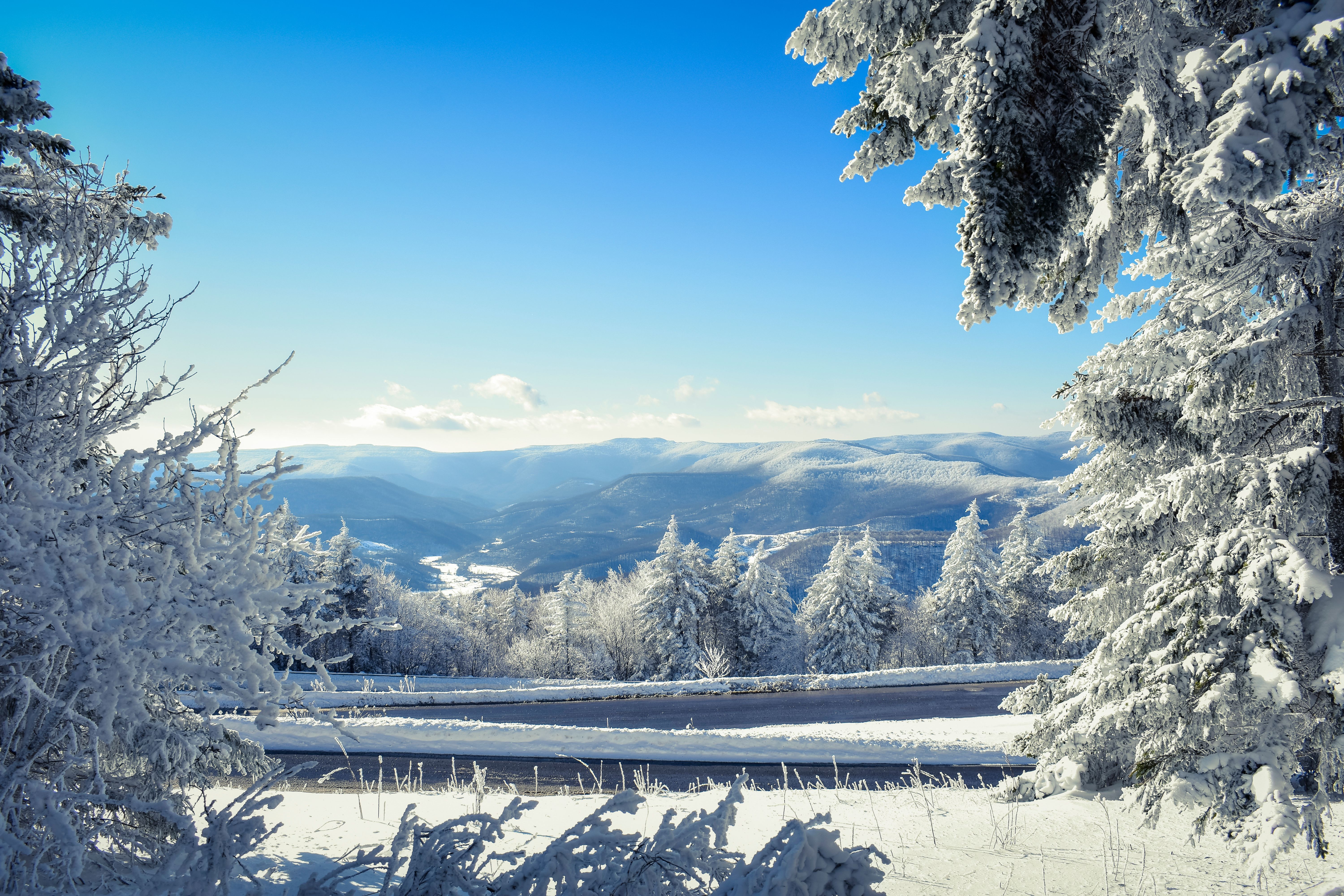
Winters in Asheville are generally mild for the mountains: January daytime highs average about 49 degrees, lows about 29, and the city sees roughly 10 inches of snow in a typical year. The weather matters most at the home level. Elevation, the road you live on and how the house is prepared decide how winter feels more than the forecast does.
People thinking about a move to Western North Carolina often ask whether they can handle the winters. For most buyers, the answer is yes. Winter here is a real season, but a manageable one, with cold mornings, a few snowy days and plenty of sunny, crisp afternoons. What deserves attention is not the average. It is the difference between one street and the next.
How cold does it get in Asheville in winter?
The National Weather Service's 1991 to 2020 climate normals for Asheville put the average January high at 48.9 degrees and the average low at 28.6 degrees. January is typically the coldest month. Asheville sits at about 2,130 feet, and as a rule homes at higher elevations run cooler and see more snow and ice than homes in the valleys.
Winter at a glance (Asheville, 1991 to 2020 normals)
| Measure | Typical figure |
|---|---|
| January average high | 48.9°F |
| January average low | 28.6°F |
| January average precipitation | 4.13 inches |
| Annual snowfall | about 10.3 inches |
| Elevation of the city | about 2,130 feet |
How much does it snow?
About 10 inches in a typical year, according to NOAA's 1991 to 2020 normals. That total usually arrives in a handful of events rather than steadily, and snow often melts within a few days in town. Higher ridges and north-facing slopes hold snow and ice longer, which is why two homes a few miles apart can have very different winters.
What happens on the roads?
This is the part of winter that matters most to a mountain homeowner. Local reporting after a winter storm in early 2026 noted that most interstate sections around Asheville had cleared by Monday morning, while many state-maintained secondary roads were still snow and ice covered. The North Carolina Department of Transportation maintains about 860 miles of secondary roads in Buncombe County, and crews work through priorities, so neighborhood roads can take longer.
For a buyer, that turns into practical questions to ask before you commit:
- Is the road to the home public or private, and who maintains it?
- How steep is the road and the driveway, and do they face north?
- How quickly can you reach a main road, a grocery store and a hospital?
- Is there a place to park at the bottom if the driveway is too icy to climb?
Our guide to buying an Asheville luxury home covers the full mountain-home checklist.
Does the Blue Ridge Parkway close in winter?
Not as a rule, but sections can close for snow and ice. The National Park Service has said the Parkway motor road does not close for the season, while weather and maintenance closures can affect any stretch, especially at high elevations. Check the Parkway's real-time road map before you drive. When a section is closed to vehicles, Explore Asheville notes that visitors can walk, snowshoe or sled from the gate.
What makes Asheville winters enjoyable
Winter is also one of the best times to be here, and many longtime residents prefer it.
- Christmas at Biltmore runs November 3, 2026 through January 10, 2027, with holiday decor throughout Biltmore House, a 35-foot Fraser fir in the Banquet Hall and lighting in Antler Hill Village.
- Clear air and long views. Explore Asheville points to clearer winter air and vivid sunrises and sunsets over the ridgelines.
- Quiet trails and waterfalls. Looking Glass Falls and Bridal Veil Falls remain accessible in winter, with fewer crowds. Check the weather and road closures first.
- Comfortable indoor options. The Omni Grove Park Inn's underground spa, fireside dining and the galleries and restaurants downtown stay busy all season.
Utilities also run below the national average in the Asheville Area Chamber of Commerce's 2025 cost of living index (95.6, where 100 is average). Our cost of living guide has the full breakdown.
Preparing a mountain home for winter
Most winter problems are preventable. North Carolina State Extension's guidance on frozen pipes is a good starting point for any owner:
- Know where the main water shut-off is and how to use it.
- Insulate pipes near exterior walls, in crawl spaces and in attics, and seal air leaks around them.
- Disconnect garden hoses and shut off and drain pipes that lead outside.
- Keep the heat on, no lower than 55 degrees, even when the house is empty.
- Let faucets drip on pipes along exterior walls during a hard freeze, and open cabinet doors so heat reaches pipes under sinks.
- Have someone check the house if you will be away, especially a second home.
If a pipe freezes, shut off the water and call a plumber. Do not thaw it with an open flame. If a pipe bursts, call your insurance agent too.
For a home you are considering buying, add these to your questions: what is the primary heat source, is there a backup if the power goes out, how old is the roof, and what do past utility bills look like.
Is winter a good time to look at homes?
It can be. With the leaves off the trees, you can see long-range views, the lay of the land and how the sun reaches the property, which is harder to judge in summer. Brokerages in the area note that winter is also a good time to walk land and plan well and septic placement. The trade-off is that you will also see how the road and driveway behave in cold weather, which is useful information.
One caution runs the other way. A view that is open in January can be partly screened by leaves in June, so ask what the view looks like in each season.
Who winters in Asheville suit best
- Buyers who like four seasons without long, harsh winters. Cold mornings and a few snowy days, then mild afternoons.
- Retirees who want a mountain setting and are comfortable choosing a home with good road access.
- Second-home owners who will be away part of the winter and want a home that is easy to prepare and monitor.
It is a less natural fit for anyone who wants no snow or ice at all, in which case a lower-elevation or valley home, or a different region, may be a better match. Our post on whether Asheville is a good place to retire covers the wider trade-offs.
Frequently asked questions
Does it snow in Asheville? Yes, but modestly. Asheville averages about 10.3 inches of snow a year, based on NOAA's 1991 to 2020 climate normals. Higher elevations nearby see more.
How cold does Asheville get in winter? January, the coldest month, averages a high of 48.9 degrees and a low of 28.6 degrees, based on the National Weather Service's 1991 to 2020 normals. Colder nights and snowy days do occur, especially at higher elevations.
Does the Blue Ridge Parkway close in winter? The National Park Service has said the Parkway does not close for the season as a rule, but sections can close for snow, ice and maintenance. Check the Parkway's real-time road map before you go.
Is winter a good time to buy a home in Asheville? It can be a good time to look. Bare trees show the long-range views and the lay of the land, and you can see how the road and driveway handle cold weather. Ask what the view looks like when the trees are in leaf.
How do you protect a mountain home from frozen pipes? Insulate pipes near exterior walls, crawl spaces and attics, disconnect hoses, keep the heat on at 55 degrees or higher, let faucets drip in a hard freeze, and have someone check the house if you are away. If a pipe freezes, shut off the water and call a plumber.
What is there to do in Asheville in winter? Christmas at Biltmore, which runs November 3, 2026 through January 10, 2027, winter waterfalls and sunsets, quiet trails, and the galleries, restaurants and spas that stay open all season.
Thinking about a mountain home?
The right winter setup starts with the right home and the right road. If you would like help comparing neighborhoods on elevation, access and views, see Asheville's luxury neighborhoods or request a private consultation.